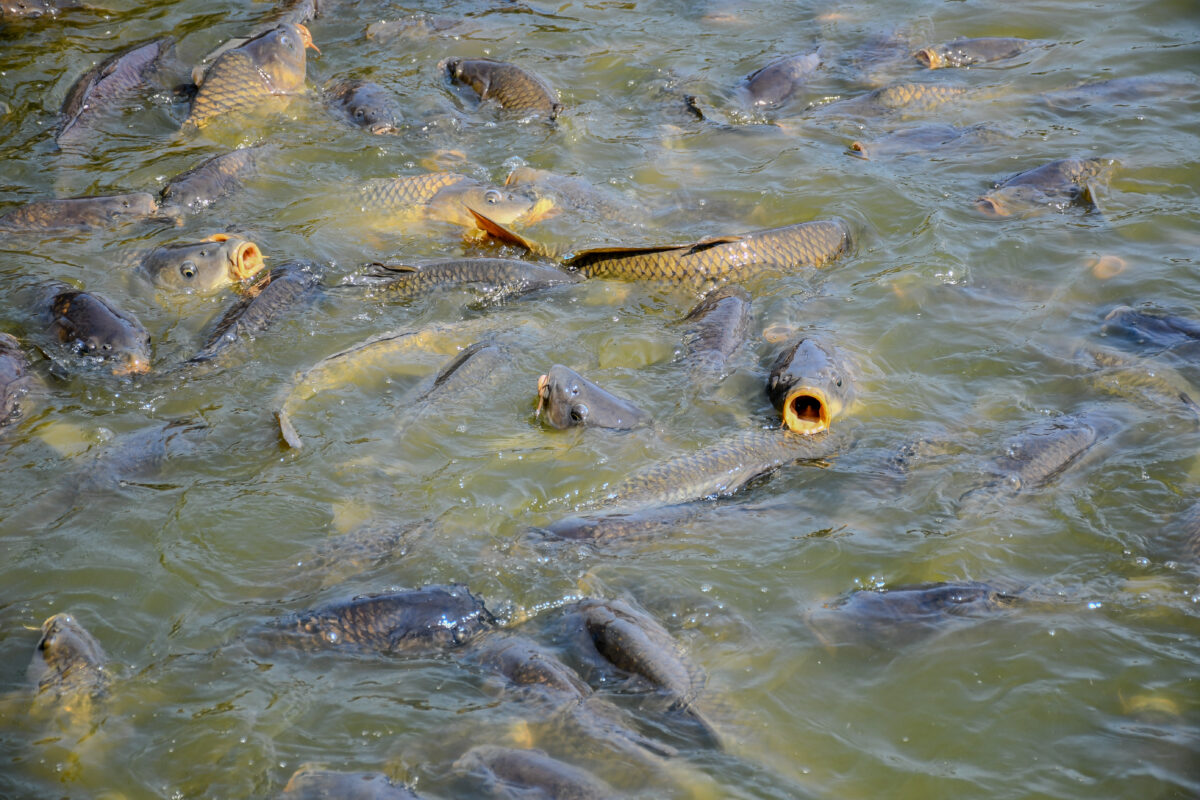
Cyprinus carpio
The common carp is native to Asia and Europe, but was introduced in North America in the 1800s. The thought back then was that people would eat carp like they do in Eurasia, but it turned out that wasn’t the case as Americans preferred other fish. Today, it’s abundant and is at times considered an invasive species as it multiples fast and can overtake other species.
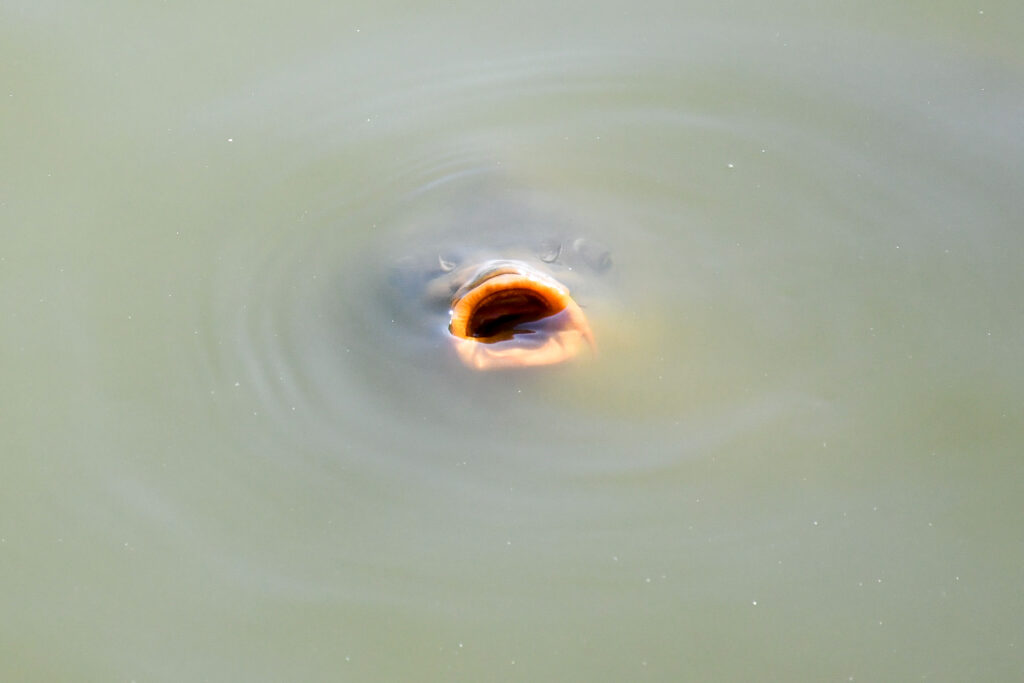
What do common carp look like? They are a large, deep-bodied fish that are grey-ish bronze in color with a bit of a shimmer. The easiest way to distinguish them is by their large pink mouths, which have a pair of so-called barbels – ie. whisker like-organs.
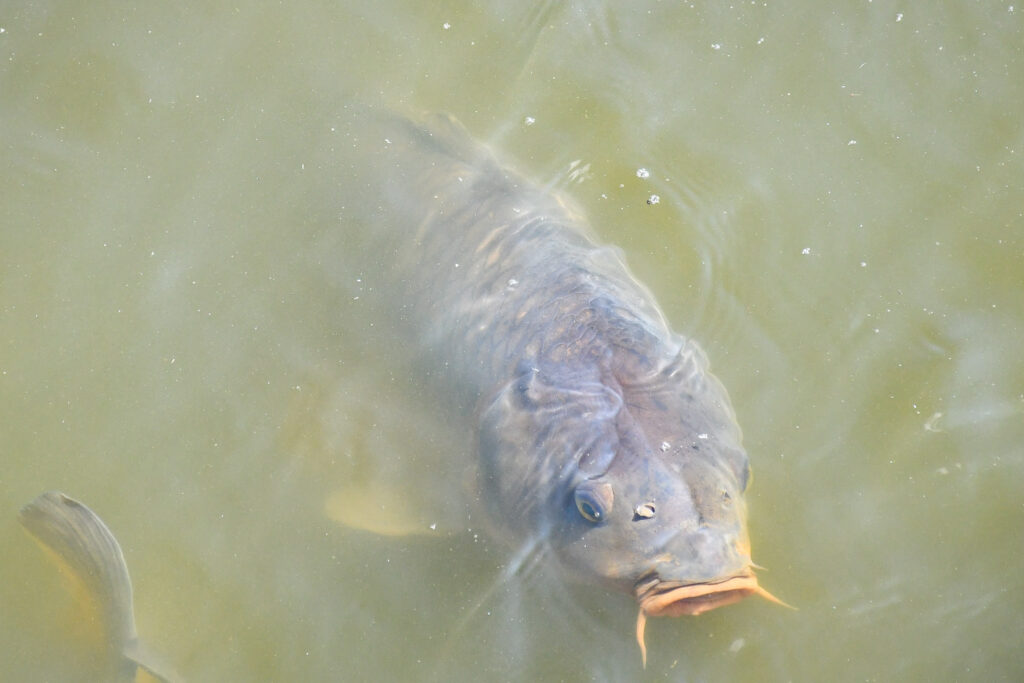
Freshwater or saltwater: Freshwater – they prefer slow-moving bodies of water.
Where do they live? Originally from lakes and temperate waters in Asia and Europe (there they are known as the Eurasian Carp), it has been domesticated and introduced elsewhere throughout the world, and it is now considered one of the most invasive species in the world. In Europe, they are fished often and are eaten as part of Christmas dinner in parts of Europe.
What do they eat? Plants, algae, invertebrates, other fish and, yes, bread.
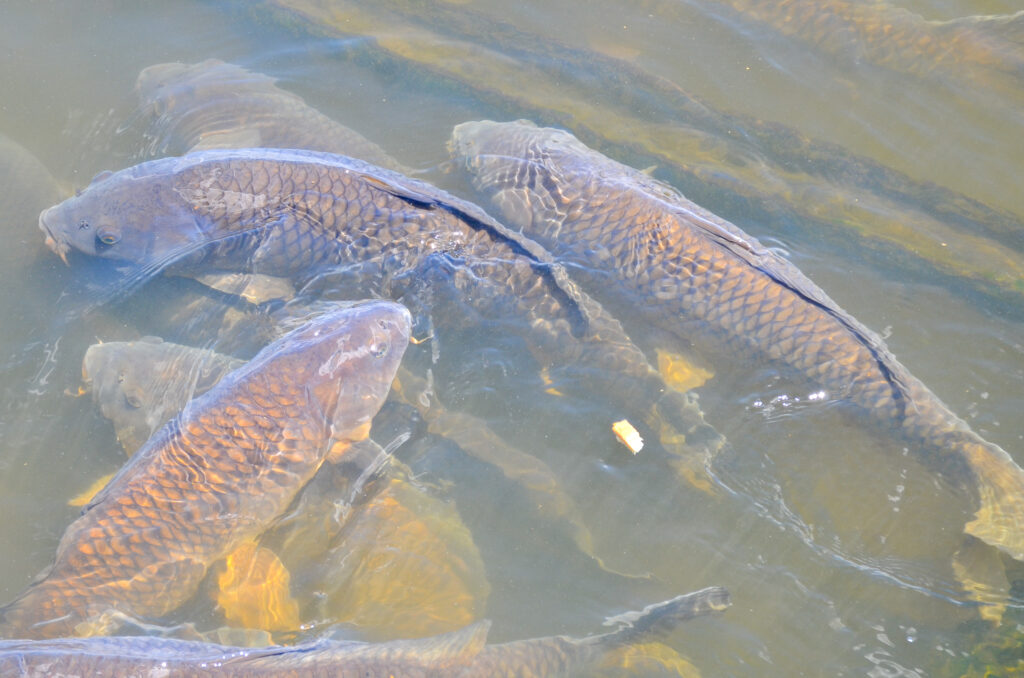
What are baby carp called? Fry
What does a carp family look like? A mama carp can release into the water more than 1 million eggs in a year, and up to 300,000 at a time. Many of these eggs and the fry are eaten by predators. They like to hang out together in large groups.
How long do they live? Up to 50 years
Do they hibernate? No, but since they are cold blooded, they do move to deeper or warmer water as it gets colder and slow down their metabolism.
Do they migrate? Not usually, but there is some indication that some subspecies in Eurasia do travel.
Do they form schools? Yes
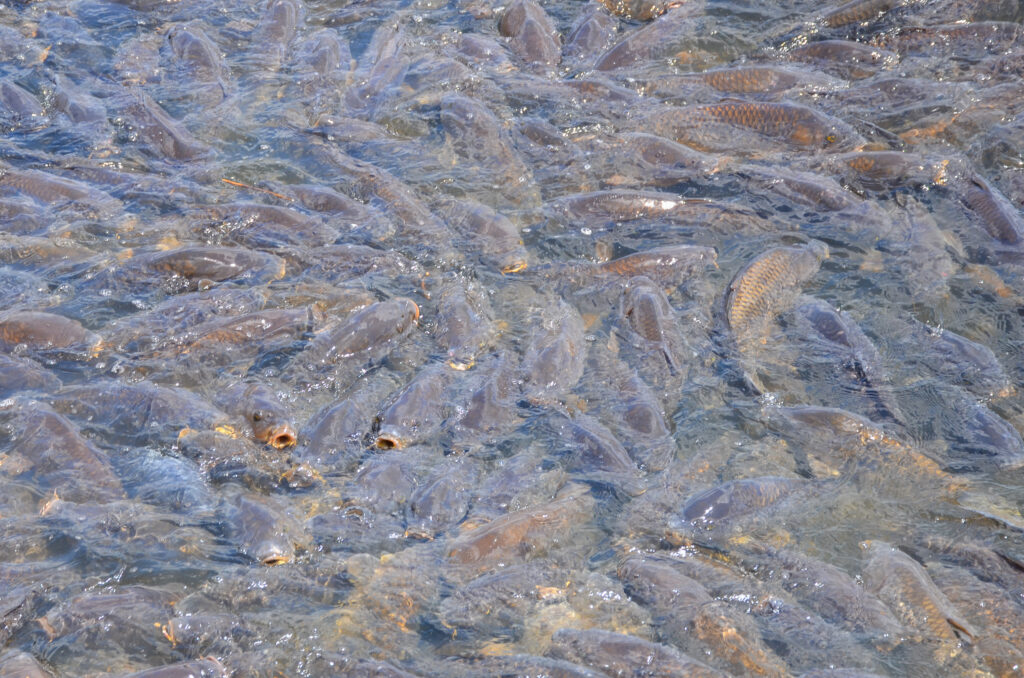
Are they endangered? No, according to the IUCN Red List, they are of least concern and are considered invasive in many areas. However, they are vulnerable in their native habitats in Asia and Europe near the Mediteranean Region, where the population is decreasing.
What else is interesting about common carp? While they don’t have any teeth in their mouths, they do have a row of small teeth behind their last gill near their throats that crushes shells, seeds and plants. They suck all sorts of things into their mouth, which is then sorted out, with food getting digested and other stuff getting spit back up.
Sightings:
Pymatuning State Park, Pennsylvania